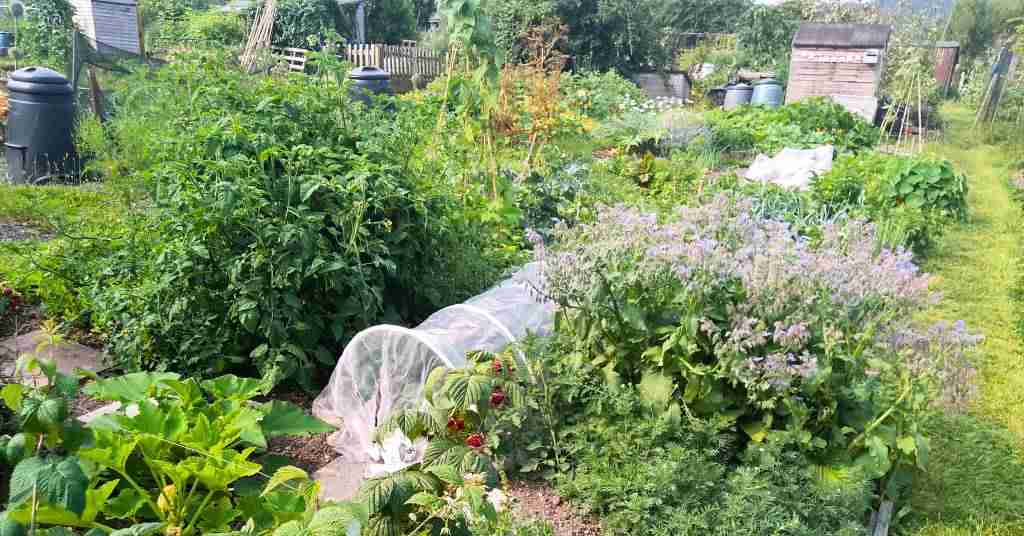
If you’re thinking about getting an allotment plot, or already have one, joining an allotment association can reap many rewards. Below you’ll learn what an allotment association is, the benefits of joining one, and how to become a member.

Allotments have seen a surge in popularity recently.
This survey, from 2022, found a huge increase in demand for local plots. And this petition in Scotland is calling upon the government for an increase in allotment provision.
This is quite a change from the steady decline in post war allotment demand.
And whilst allotments (and allotment associations) once conjured up images of older man in wellies sipping tea from a shed (my Grandad in between ‘secret’ trips to the bookies), today’s allotments are witnessing a new generation of gardeners (of all ages) growing their own food.
So I was over the moon when I was offered an allotment & decided to sign up for my local allotment association straight away. I’m so glad I did.
What Is An Allotment Association?
An allotment association is a group of gardeners, or plot holders, who help to maintain an allotment site & act as a liaison point with the local council.
Allotment associations are usually organised as a constituted association with an elected committee. The National Allotment Association offers more information if you’re interested, including advice on how to set up a local allotment association.
When you sign a tenancy for an allotment plot, the agreement is usually direct with your local council. On some allotments, however, you may find it’s an allotment association that manages the site. This is known as self or devolved management and, sometimes in cases like this, you’ll lease your plot direct from the allotment association.
How an allotment association works really depends on the individual association & what their agreed role is.
On my allotment, for example, I lease my plot direct from my local council. However, it’s the allotment association that tend to act as our communal voice when problems arise or improvements are needed.
5 Benefits Of Joining An Allotment Association
From being part of a social group to seed swaps or even helping sustain the future of a site, an allotment association can offer many benefits.
Whilst not all allotment associations are run the same (it’ can be worth speaking to other allotment holders before you join), here are 5 benefits you’re likely to enjoy if you join a well run allotment association.
1 – A collective voice
Joining an allotment association means you’re part of a collective voice of people.
You’ll find many sites that don’t have active associations often become neglected, or even taken over for development.
Being part of this community means you can communicate any concerns, issues or suggestions for improvement direct to your allotment association, who then liaise with the council to help ensure the allotment is run as efficiently as possible.
Our allotment association, for example, liaise with the council each year to organise an annual ‘Tidy Up’. This involves delivery of a skip, for any rubbish we’ve built up over the year. There’s also a controlled bonfire for burnable, organic rubbish. This saved me a fortune in trips to the tip, as I’d dismantled an old shed & I had bits of wood everywhere. It also encourages people to take care of their plot.
We’ve also got a fantastic series of water taps & large water butts on our site & I later discovered this was purely down to campaigning by the allotment association.
2 – Social benefits
Allotment associations also provide a sense of community and belonging. I love the sense of common purpose they bring across a range of ages – from teenagers through to seasoned gardeners in their 80s.
Allotment associations also offer the opportunity to meet like-minded people who share a passion for gardening.
You’ll find many allotment associations organise regular social events too. These can range from monthly meet ups, where members share gardening tips to gardening talks, summer allotment parties or even produce shows (who doesn’t want to show off their massive marrow).
3 – Gardening advice
Allotment associations are often overflowing with seasoned gardeners happy to share their knowledge and advice. They’ve often been plot holders for many years and can offer tips on soil types, what grows well, weather patterns, or things like common bird & pest problems.
This can be invaluable if you’re a beginner starting out or new to an area.
4 – Education & training
Many allotment associations offer workshops and training sessions on a range of gardening topics – from seed sowing to composting. This can be a great way to learn new skills and improve your gardening knowledge.
5 – Discounts on seeds & gardening equipment

Allotment associations often have partnerships with local garden centres or seed suppliers, where you can get a discount.
Our allotment association offers discounts at a local gardening centre, plus we get 50% off all flower & veg seeds from a leading UK seed supplier. We can also get very affordable bird, insect & butterfly netting, bamboo canes, gardening stakes & other gardening bits & bobs direct from one of our members.
And every autumn, there’s a huge delivery of manure. All allotment association members get 3 barrow loads for free.
How To Join An Allotment Association
To join a local allotment association, you’ll almost certainly need to hold an allotment plot in your area.
If you don’t already have one, you can find an allotment local to you by Googling something like ‘allotments near me’. You can also visit to your local council website and try searching for ‘allotments’. Gardening forums can also be helpful places for advice on allotment availability & the best sites to go for.
You’ll probably find, (as I did) that when you’re offered an allotment plot, you’re automatically sent details of how to join the local allotment association at the same time.
Keep in mind as well, most allotment associations ask for a small annual membership fee. These tend to be very affordable & generally help to cover costs & provision of any services & benefits the association provides (manure or skip deliveries, or social events, for example).
Conclusion
If you already have an allotment or are hoping to get one soon, it’s well worth finding out if there’s an allotment association in your area. Membership fees are usually very low and if the association is well run, the benefits usually far outweigh the cost of joining.
Once you join, you can be as active as you wish (you don’t have to become heavily involved if you don’t want to) and it’s often a great way to meet other plot holders. And who knows, you may even get to show off that massive marrow…