A guide to 10 popular perennial vegetables to grow in a vegetable or permaculture garden, including how many years a vegetable will likely crop for, best time of year for planting & type of soil conditions preferred by each plant.

This page may contain affiliate links. As an Amazon affiliate I earn from qualifying commissions.
Embarrassingly, I didn’t even know what a perennial vegetable was when I started gardening. Now I wax lyrical about their benefits to anyone who will listen.
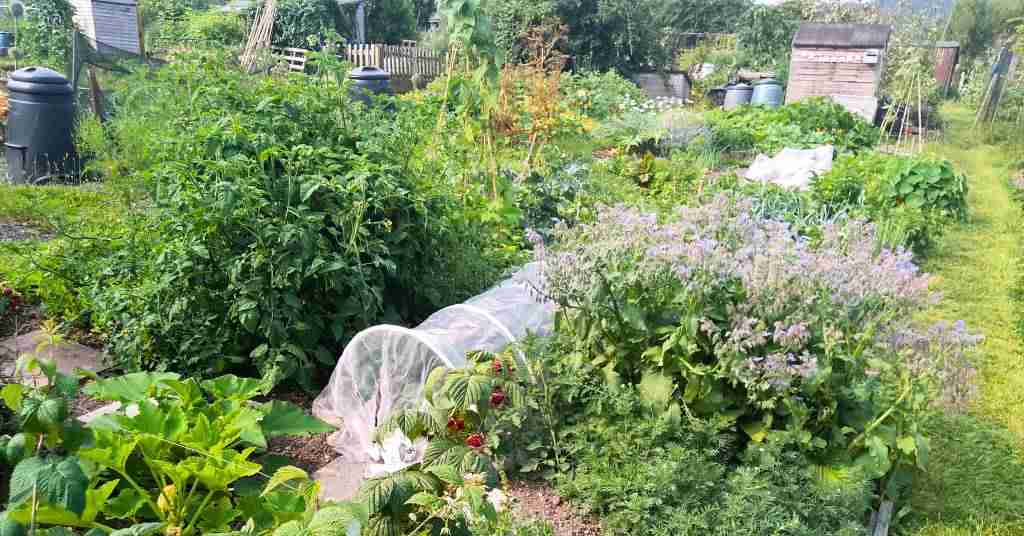
From the tartness of ruby red rhubarb to the spicy goodness of horseradish, selecting perennial vegetables to grow in my allotment was one of the best decisions I made when I first started designing it.
Perennial veggies now form the backbone of my plot & I love them because they taste good, they grow back year after year & they add biodiversity to my gardening.
What are Perennial Vegetables?
Perennial vegetables are plants that grow back year after year without the need for replanting. Many, if not most, common vegetables are annuals (or grown as annuals) which means they need to be re-planted each year. This generally means they require much more maintenance.
Perennials also tend to have longer growing seasons than annuals, as well as deeper, more widespread roots, which means they’re able to access water and nutrients from deeper in the soil.
Advantages of Perennial Vegetables
I grow many perennial vegetables in my allotment – from rhubarb & artichokes to horseradish & sea kale.
I love the diversity they bring & you’ll find many are beautiful to look at. The tall, elegant, purple flowering bulbs of globe artichokes are absolutely stunning. They also attract important pollinators such as bees.
I also follow many principles of permaculture gardening in my allotment & you’ll find edible perennials form the backbone of any permaculture system due to the ecological advantages they bring.
One of their key benefits is the fact perennial vegetables require less effort to grow than annuals because they grow back year after year. Often with longer growing seasons, they also supply a steady supply of fresh produce throughout the growing season, without the need for staggered planting.
Perennials also involve less soil intrusion than annuals, because there’s no replanting or re-digging involved. This helps to:
- reduce soil erosion
- improve soil fertility
- create important soil webs below the ground
- increase food security through repeated cropping.
And according to this study, many perennial vegetables also show higher levels of key nutrients, compared to many widely & intensively grown & marketed annual vegetables. They also increase crop biodiversity.
Here are 10 of my favourite perennial vegetables to grow:
10 Perennial Vegetables To Grow
1 – Asparagus (Asparagus officinalis)
Asparagus is one of the most popular perennial vegetables and it’s a great source of vitamins and minerals. It is easy to grow and can produce for up to 20 years. Asparagus plants require a lot of space and prefer well-draining soil with full sun exposure.
The best time to plant asparagus is in early spring & the easiest way to get it growing is by buying a crown from a garden centre, or online. You can plant the crown directly into the soil & crops will yield quicker than plants grown from seed. You can, of course, grow them from seed, but it will take 2-3 years before you’ll get a decent harvest.
2 – Rhubarb (Rheum rhabarbarum)

Rhubarb, believe or not, is as vegetable. Who Knew? I didn’t.
Another popular perennial vegetable, rhubarb produces large, tart stalks that are great for baking and cooking. Rhubarb plants prefer well-drained soil and partial shade. They require little maintenance and can produce for up to 10 years.
Rhubarb should be planted in early spring or autumn & for an early crop, you can force rhubarb over winter by covering it with a large pot, bucket or terracotta rhubarb forcer. I used the base of a water butt to yield the tender stalks above. If you do force your rhubarb, it’s generally recommended not to do it again the following year, although some people do to absolutely fine results.
3 – Sea Kale (Crambe maritima)
Sea kale is a perennial vegetable that produces large, tender leaves. Related to the cabbage, sea kale was first cultivated as a vegetable in the UK around the turn of the 18th century. The tender leaves are great eaten raw in salads or cooked in stir-fries. You can also blanch the stem and eat it as a regular vegetable.
Sea kale prefers sandy soil and partial shade & can produce for up to 10 years. Plant in early spring.
4 – Globe Artichoke (Cynara cardunculus var. scolymus)

The globe artichoke, (also commonly known as French artichoke and green artichoke in the U.S), is a cultivated variety of the cardoon, which is a part of the thistle family. The edible part of the globe artichoke consists of the flower buds, which you harvest before they open & start to bloom.
Globe artichokes require a fertile & moist, but well drained, soil in a sunny but sheltered position. Quite difficult to grow from seed, globe artichokes are often sold as plants cultivated from suckers. Plant these out in Autumn or early Spring.
5 – Horseradish (Armoracia rusticana)
Horseradish is a perennial vegetable that produces a spicy root that’s great for sauces and condiments. It is easy to grow and can tolerate a wide range of soil conditions. Horseradish prefers full sun exposure and can produce for up to 5 years. It should be planted in early spring.
Keep in mind, however, horseradish can take over & prove difficult to remove if you decide you don’t want to grow it anymore (roots reach very deep & even the tiniest bit of root is very likely to sprout again). So it’s best to plant horseradish somewhere out of the way or contain it’s roots by planting it in a bucket. I’ve got mine in it’s own dedicated small raised bed I built at the back of my allotment.
Another option is to grow it in a large container, such as a potato growing sack. This makes it much easier to control.
6 – Sorrel (Rumex acetosa)

Sorrel is a perennial herb that produces tart, lemony leaves that are great for salads and sauces.
Sometimes called spinach dock, sorrel has a really distinct & powerful taste & it survives well without much attention.
It prefers well-drained soil that’s slightly acidic and partial shade. Sorrel can produce for up to 10 years and should be planted in early spring.
7 – Lovage (Levisticum officinale)
A tall perennial herb that produces large, flavourful leaves, lovage makes a great addition to soups and stews. It can also be eaten raw in salads.
Long cultivated in Europe, it has a flavour reminiscent of celery. Lovage prefers moist, well-drained soil and partial shade.
Used as a digestive aid by the ancient Greeks, lovage can produce for up to 15 years. Plant in early spring.
8 – Chives (Allium schoenoprasum)

Chives are a common perennial plant, with close relatives including the common onion, garlic, shallot, leek, scallion and Chinese onion.
Chive plants produce attractive, light purple flowers & both the flower & stem are edible. The long, slim leaves are delicious eaten raw in salads, or used in soups, stews & omelettes & the pretty flower blossoms make a lovely garnish.
Chives prefer moisture-retaining, well-drained soil and a sunny or partially shaded area. They can also be grown in pots or on windowsills as part of a herb display. Sow in early Spring.
9 – Jerusalem Artichoke (Helianthus tuberosus)

Jerusalem artichoke is a member of the sunflower family and produces a tuber that is similar to a potato. It is easy to grow and can tolerate a wide range of soil conditions. Jerusalem artichokes prefer a sunny planting site and can produce for up to 10 years.
Jerusalem artichokes are grown from tubers, rather than seeds & you can buy these from garden centres, as well as online. Plant out tubers in early spring in a plot that has plenty of space & where they won’t overshadow other crops.
Jerusalem Artichokes are large plants, which can also get quite tall & like horseradish plants, they will happily spread if left unchecked. So either plant them somewhere self contained (I have mine in a recycled jute coffee bean sack) or make sure you dig deep and remove all the rhizome tubers from the ground when you harvest a crop.
10 – Welsh Onion (Allium fistulosum)
A close relative of the chive, Welsh onion is a perennial herb that produces long, thin green leaves that taste delicious in soups and salads. It prefers moist, well-drained soil and partial shade.
Also commonly called bunching onion, long green onion, Japanese bunching onion and spring onion, Welsh onion can produce for up to 5 years and should be planted in early spring.
Other Perennial Vegetables To Grow
The 10 perennial vegetables listed above are some of the most commonly known, but there are actually hundreds of perennial vegetables. Good King Henry is another popular one, especially among permaculture gardeners. A native to Southern Europe, Good King Henry produces shoots, leaves and flower buds, which are all edible.
Some other perennial vegetables you might want to try include Egyptian walking onion, watercress, chicory, ramps (wild leeks) perpetual spinach, Daubenton kale & skirret.
And if you want an even bigger choice of perennial vegetables to choose from, there’s a link to a hefty 613 cultivated species in this scientific study on perennial veg as a neglected source of biodiversity & nutrition (you’ll find the link at the end of the study in ‘Supporting Information’).
Are There Any Cons To Perennial Vegetables?
As with all good things, perennial veg do come with a couple of things to think about.
Firstly, depending on how you garden, pest and disease control may need a bit more thoughtful planning. This is because perennial vegetables are usually grown in the same place for many years, so crop rotation practices don’t apply.
If you’re short on space, some perennial vegetables also require more space to grow. They can also take longer to get going – asparagus grown from seed, for example., won’t yield a crop for a couple of years.
However, many garden centres sell year old asparagus crowns, horseradish thongs or Globe artichoke plants, which are ready to plant straight out & will crop much faster. And of course, once established, they’ll re-crop for years to come.
Thongs, Hearts, Globes & Spears

I’ve known people shun many perennial vegetables because they’re a bit ‘weird’. My daughter’s eyebrows rocketed skyward (not in a good way) when I suggested sea kale in a stir fry. And when I said horseradish ‘thong’ – well you can imagine…
However, growing perennial vegetables doesn’t mean you can’t still grow carrots & tomatoes & the many other annuals we all love. But what they will do is contribute diversity to your vegetables & add biodiversity to your garden or allotment. I also find the joy of a homegrown vegetable is often about finding a new recipe to cook. Sea kale really is delicious in stir fries.
Conclusion
Perennial vegetables are an excellent addition to any garden & I love the diversity they bring to my allotment. They require less maintenance than annual vegetables and can provide a steady supply of fresh produce throughout the growing season.
They do sometimes require more space, especially perennial vegetable plants such as artichokes, but you’ll be able to enjoy the delicious yields they offer for years to come.
I’m growing all the perennials above (except lovage) this year & I really like the unique (and sometimes slightly wild) look my allotment patch has over some of the more traditional orderly rows of carrots.